
After five days of a severe migraine and being unable to keep anything down, Tammy Corey knew something wasn’t right.
Her primary care provider recommended that she go to the emergency room to find out if something else might be causing her symptoms.
One MRI later, Tammy received news she never expected: her doctor suspected glioblastoma (GBM).
The diagnosis was later confirmed.
From a Migraine to Brain Surgery
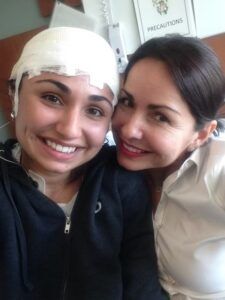
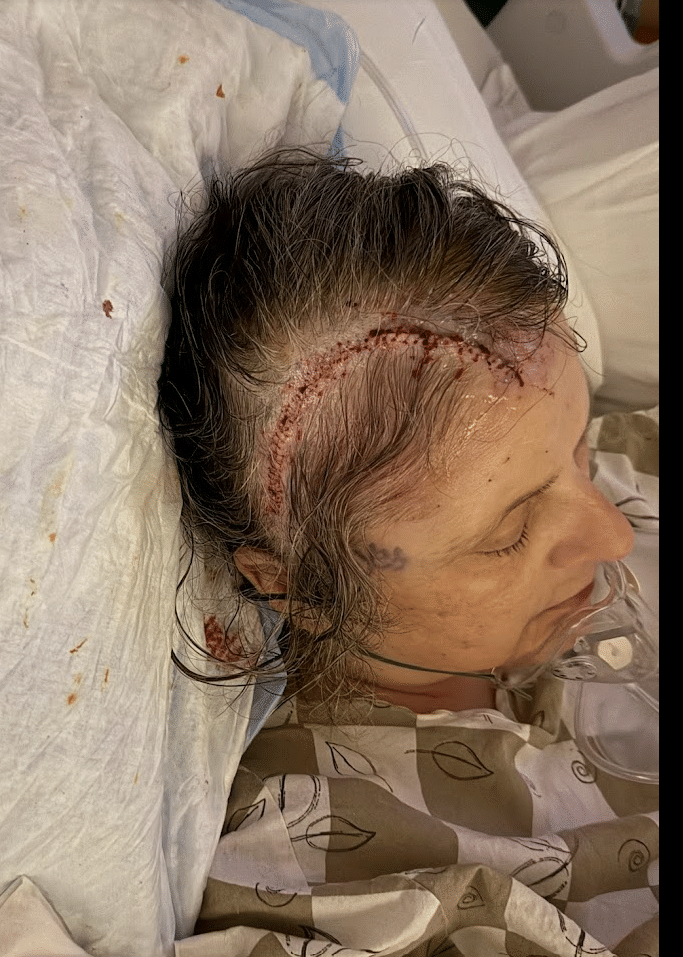
Just two days after her tumor was discovered, Tammy underwent brain surgery to remove the five-centimeter tumor.
The surgery went well, and Tammy was surprised by how manageable her pain was afterward.
Directly after surgery, her doctor asked how she was feeling.
“I told him I felt like I got shot in the head,” Tammy recalls.
When he asked her to rate her pain from zero to 10, Tammy answered, “3.5.”
“He said 3.5 was pretty good for being shot in the head.”
It was a moment of humor during an otherwise overwhelming experience.
Tammy had expected significantly more pain following brain surgery. Aside from some morning headaches during the first few days, she says she was amazed that she wasn’t experiencing more discomfort.
After spending three days in rehabilitation, Tammy continued her recovery and was home 10 days after surgery.
Preparing for What Comes Next
Now, Tammy is preparing for the next phase of her treatment: chemotherapy and radiation.
Like many people beginning brain tumor treatment, she has questions about what to expect during treatment and how she will feel afterward.
“I do expect that I will be exhausted during treatment,” Tammy says, “and hopefully, we get good news after the first round.”
There are also difficult questions about the future.
Tammy admits that recurrence is something she worries about, but she is trying to keep her focus on the treatment immediately ahead of her rather than what might happen later.
“I shouldn’t worry about that now, since I have not even gone through treatments for the current tumor,” she says.
Staying Herself Through the Uncertainty
Perhaps one of Tammy’s greatest challenges is finding a way to acknowledge the seriousness of her diagnosis without allowing it to consume her.
“I am trying to stay positive and not lose myself in the diagnosis and prognosis,” she says.
There are still unknowns. There are treatments ahead and questions that don’t yet have answers. But Tammy is taking her journey one step at a time—and finding room for humor along the way.
As she puts it: “AAUUGGHH. Happy New Year!”