Andreina Molano’s brain tumor story began in a way she never could have anticipated: with an overwhelming feeling that something was terribly wrong.
One night, while driving home from a movie with her mother and sister, Andreina suddenly felt a sense of panic and doom. Frightening, intrusive thoughts raced through her mind.
Her family thought she might be experiencing a panic attack. Andreina thought so, too—at first.
But the feeling didn’t go away.
“I kept saying, ‘Mom, what’s wrong with me? There’s something wrong with me. Please help me,’” Andreina recalls.
It would take two years before she learned what was happening inside her brain.
When Fear Took Over
At the time, Andreina was attending college full-time while also working. As her symptoms continued, everyday activities became increasingly difficult.
She stopped driving because of intense fear and trembling. Watching television, reading, talking with friends and even being around certain objects could trigger an overwhelming sense that something terrible was about to happen.
Andreina sought help from mental health professionals and received several diagnoses related to anxiety, depression and trauma. She attended therapy multiple times a week and tried medication.
But she continued to feel that something else was wrong.
Andreina even raised the possibility of a brain tumor with medical providers. Still, her symptoms continued to be treated primarily as psychiatric.
Meanwhile, she kept going to school.
“I don’t know how I made it through, but I did,” she says.
Sometimes she would have to leave class every 15 minutes just to splash water on her face and try to calm the overwhelming fear.
She also became increasingly isolated.
“I told no one except my family and providers because I was terrified everyone would think I was crazy.”
Finally Getting an Answer
After nearly two years of symptoms, Andreina continued advocating for herself.
A physician who knew her family and had become a source of support listened as Andreina again described what she was experiencing.
Finally, she insisted on an MRI.
“I swear something is wrong,” she remembers telling him.
She underwent the scan the following day.
Afterward, Andreina went to the gym. While she was on the StairMaster, her mother called. Andreina could immediately tell something was different in her voice.
She rushed home.
Her family was waiting for her, crying.
The MRI had revealed a brain tumor in her left amygdala.
After spending so long questioning what was happening to her, Andreina finally had an answer.
Finding the Right Care
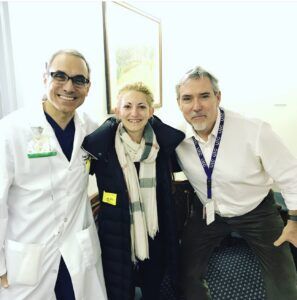
Andreina was connected with neurosurgeon Dr. Ricardo Komotar at the University of Miami.
She remembers one seemingly small moment from the day of her consultation that has stayed with her ever since.
While waiting for the appointment, Andreina and her family decided to play “21 Questions.” The answer to their game happened to be a honey badger.
Then they walked into Dr. Komotar’s office.
It was filled with honey badger posters and stuffed animals.
“They’re my favorite animal,” he told them.
For Andreina, the coincidence felt like another sign that she was exactly where she needed to be.
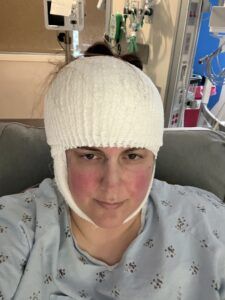
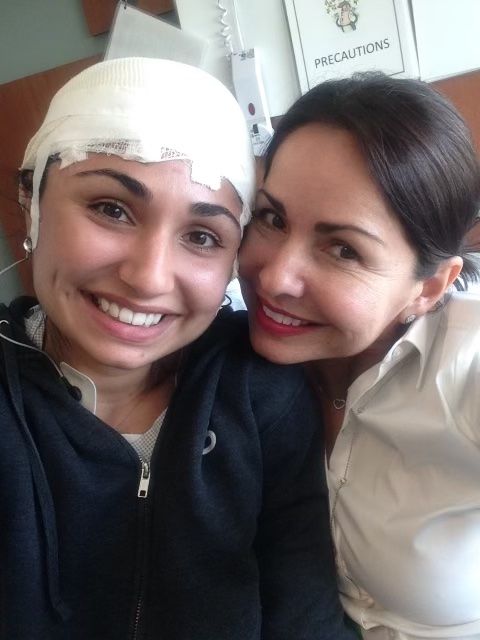
Dr. Komotar took her case, and on October 22, 2015, Andreina underwent surgery to remove the tumor she had nicknamed “Peanut.”
Discovering That Surgery Wasn’t the Finish Line
The operation was successful, but Andreina soon discovered that brain tumor recovery could be its own difficult journey.
“I wish neurologists prepared patients more for life after a craniotomy,” she says.
Andreina experienced a challenging recovery. She couldn’t drive for a year and spent much of her early recovery in bed. Her relationships changed, and she lost friendships along the way.
Finding herself again didn’t happen quickly.
In fact, Andreina says it took about eight years.
But slowly, she began building a new life—and discovered that her experience had changed the direction of that life in ways she never expected.
From Patient to Physician Assistant
Andreina went on to earn a master’s degree in biomedical science and became a physician assistant.
Today, the experience of having once been the frightened patient searching for answers influences how she cares for her own patients.
“Now, I connect with my patients on a deeper level because I’ve been on the other side,” she says.
Her brain tumor journey also had unexpected effects on her family.
The physician who helped Andreina obtain the MRI, Dr. Aldo Ray Montes, eventually became her stepfather. Her sister also made a move during Andreina’s illness that ultimately led to building a life with the man who became her husband.
Andreina jokingly gives the credit to her former brain tumor.
“This is all thanks to Peanut!”
Finding Meaning in an Unexpected Journey
Andreina would never describe recovery as easy. But more than a decade after her surgery, she can look back and recognize not only what the experience took from her, but also what she gained.
“Life isn’t perfect—but I’ve gained faith, depth, empathy and perspective that I wouldn’t trade for anything.”
Her experience taught her to trust herself, ask for help and recognize that strength doesn’t always feel powerful while you’re living through something difficult.
She also hopes her story encourages others not to feel ashamed of what they are experiencing.
“Even if your strength feels small—trust it,” Andreina says. “And keep moving forward, one day at a time.”
She doesn’t know what challenges the future may bring. But she knows what she wants to do with what she has already experienced.
“We can at least try to make the world a better place with our experience, one day at a time.”