
John Rowe had no headaches, neurological changes or other warning signs that something might be wrong.
Then, during an ordinary Saturday walk, everything changed.
“I guess my blackout, while not good, did help find the first tumor,” John says.
An Unexpected Discovery
In March 2024, John was living in Appleton, Wisconsin. One Saturday, he headed out for a walk toward downtown.
The next thing he remembers is waking up in a local emergency room.
John had unexpectedly blacked out. Until that moment, he says he had experienced no symptoms that would have suggested the presence of a brain tumor.
The following morning, a neurosurgeon and nurse came into his hospital room with an answer: imaging had revealed a meningioma.
John was told he needed surgery, which was scheduled for two weeks later.
At the time, John’s wife was living in Missouri. With little time to prepare, she packed her vehicle, loaded up their two dogs and made the trip to Wisconsin to be by his side.
Surgery and Recovery
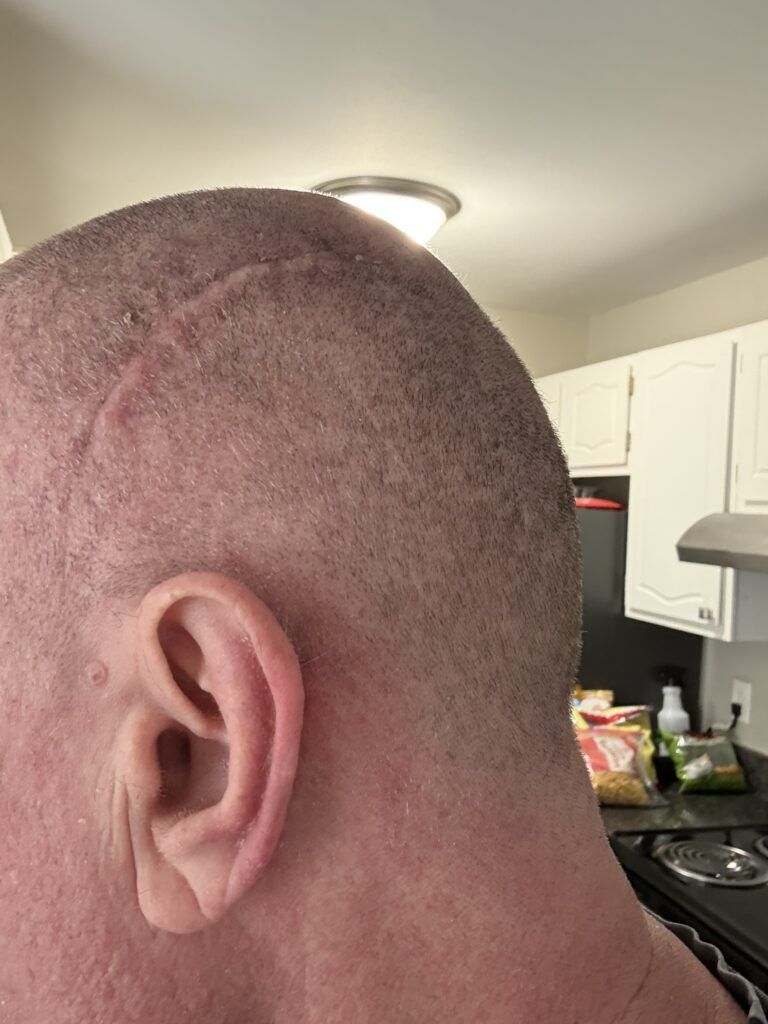
John underwent surgery to remove the meningioma in a procedure that lasted more than five hours. He remained in the hospital for four days.
During his recovery, John experienced difficulty with his speech. Fortunately, the problem resolved within a few days.
After returning to his apartment, he spent several weeks in physical therapy. About five weeks after surgery, John was able to return to work.
“I felt great,” he recalls. He had recovered well and was experiencing no noticeable side effects from the surgery.
But his brain tumor journey wasn’t over.
The Meningioma Returns
In November 2024, John underwent a follow-up MRI. The scan showed that the meningioma had grown back.
He was referred to a radiation oncologist for further evaluation. At his appointment in January 2025, John learned that the tumor was too large to treat with radiation at that time. He was then referred to a neurosurgeon in Madison, Wisconsin.
Because of the tumor’s growth and the limitations on treating it with radiation, another surgery was recommended.
John’s second surgery was scheduled for April 14, 2025.
Once again, his wife traveled from Missouri to be there for him. The couple rented a home near Madison so she could remain close while John underwent surgery and spent five days in the hospital.
After being discharged, John spent a few additional days recovering near Madison before they returned to Appleton. He remained off work for approximately five weeks while he recovered.
Surgery, Radiation and Good News
A follow-up MRI showed that nearly all of the tumor had been successfully removed during John’s second surgery. His care team recommended radiation therapy to treat the remaining tumor.
John began radiation at the end of May and completed his final treatment in early July.
Then came another MRI in early August.
When John met with his radiation oncologist to review the results, he received the news he had been waiting for: there was no longer evidence of the tumor.
Another follow-up MRI in October brought more good news, with no evidence of recurrence.
Moving Forward With Regular Monitoring
Today, John continues to undergo an MRI every three months so his medical team can closely monitor him for any changes.
Looking back, one part of his experience continues to stand out: neither the original meningioma nor its recurrence caused symptoms that alerted him something was wrong.
His unexpected blackout ultimately led doctors to discover the first tumor.
John’s experience is also a reminder of the important role follow-up care and imaging can play after brain tumor treatment. For John, regular monitoring remains an important part of moving forward.
You Are Not Alone
A brain tumor diagnosis can bring unexpected questions, decisions and changes for patients and their loved ones. The American Brain Tumor Association provides trusted information and personalized support throughout the brain tumor journey.