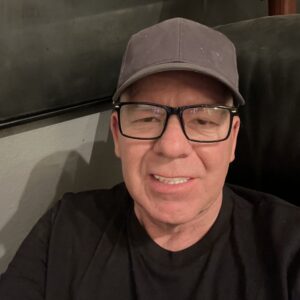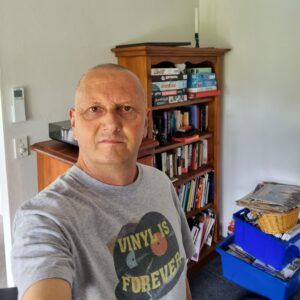
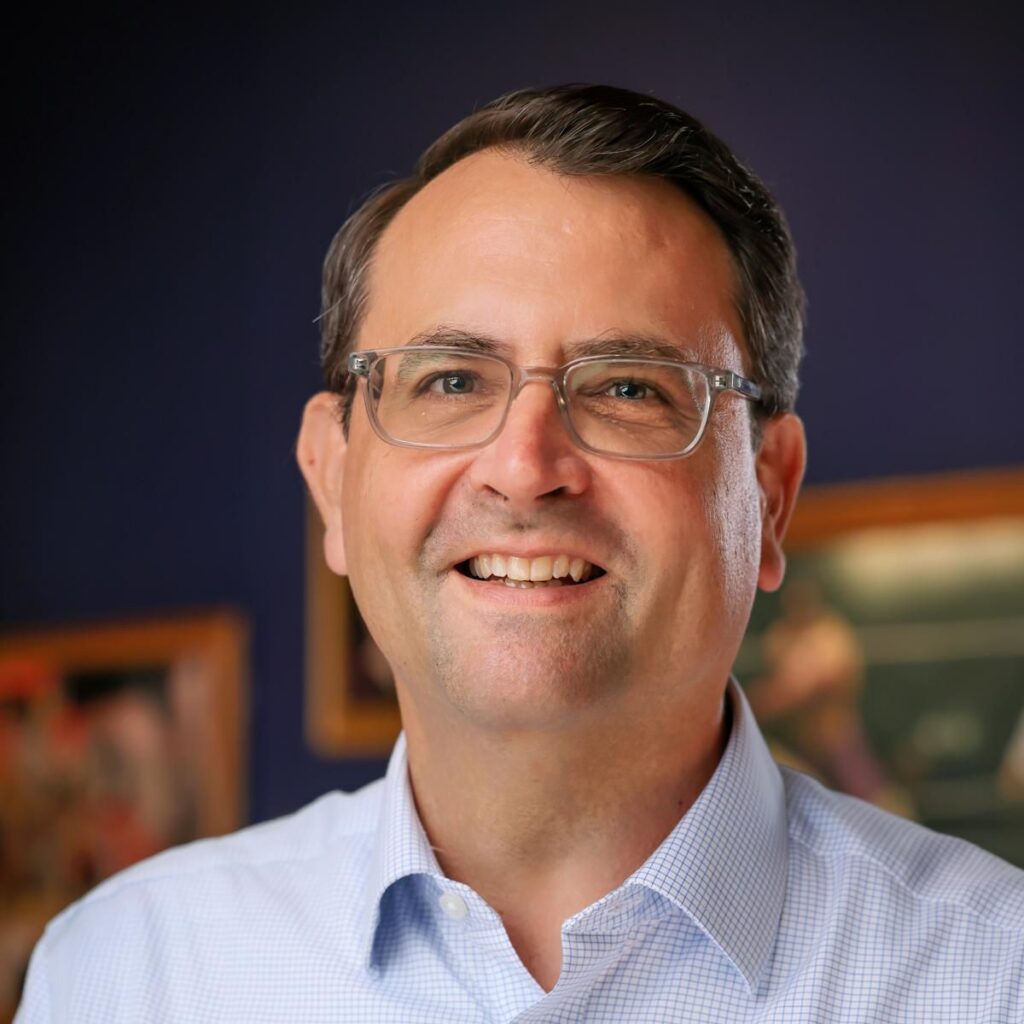
The American Brain Tumor Association (ABTA) is proud to welcome Nick Holmes to our Board of Directors. Nick brings decades of legal and leadership experience in the arts and culture sector, along with a deep personal connection to ABTA’s mission. Nick currently serves as General Counsel of the Whitney Museum of American Art, a role he has held for over 20 years, during which time the Museum expanded considerably, built substantially larger audiences, and deepened connections with the communities it serves.
After his family faced a glioblastoma diagnosis in 2019, ABTA became an important source of support — and now, Nick is bringing his experience and commitment to helping other families navigate similar journeys. We spoke with Nick about what led him to ABTA, what inspires his board service, and why this moment matters for the brain tumor community.
ABTA: Your career has been rooted in arts and culture. What drew you to serve on the board of the American Brain Tumor Association?
Nick: When my wife Mary Alice was diagnosed with glioblastoma in 2019, our world changed overnight. She had been experiencing left-side weakness, but her first doctor dismissed it as stress. A few weeks later, by the time we reached the ER and discovered she had glioblastoma, we were facing not just a devastating diagnosis but a complete upheaval of everything we knew. During Mary Alice’s lengthy rehabilitation from surgery that left her mostly paralyzed on her left side, I discovered ABTA, and it became a wonderful resource for our family. What began as searching for information and support has evolved into a deep commitment to an organization that addresses every dimension of this disease—from groundbreaking research to the day-to-day realities families face.
ABTA: What about ABTA’s mission—to fund research, support patients and families, and advocate for progress—resonated most strongly with you?
Nick: All three aspects of ABTA’s mission matter deeply to me. Having lived through how a glioblastoma diagnosis completely upends a family—financially, emotionally, practically—I know firsthand that the disease doesn’t just affect the patient. When you’re facing brain surgery, rehabilitation, and an uncertain prognosis, the last thing any family should worry about is whether they can keep their lives stable. We were fortunate to live in NYC, where we have access to world-class hospitals close by, but we’re mindful that many families may be farther away from treatment and may need help navigating care. Of course, the research mission is critical, serving on the Mission Committee and reviewing grants has shown me the incredible dedication of researchers working toward better treatments. We’ve been fortunate to get to know a number of doctors and researchers working in the field, and we’re encouraged to hear about developments in treatments.
ABTA: Was there a particular moment, conversation, or insight that made joining the ABTA board feel like the right step for you?
Nick: Two moments stand together in my mind. The first was attending my first ABTA symposium, shortly after my wife’s surgery and during her recovery, and being struck by the caliber of experts, doctors, and researchers gathered in one place—all focused on this single mission. It was the first time since Mary Alice’s diagnosis that I felt like we weren’t alone, that there was this entire infrastructure of smart, dedicated people working on this disease. The second was my first BT5K, which I did on my own several years ago. I immediately found a community with shared experiences—survivors, caregivers, and families who understood what we were going through without explanation. There was a way to connect with one another that felt genuine and ultimately hopeful. Since then, our team has grown to many dozens of friends and family. I realized ABTA wasn’t just providing services; it was creating meaningful human connections that are so important to me.
ABTA: The Whitney Museum plays an important role in shaping public dialogue and connection through art. How do you see the values of arts and culture intersecting with healthcare, research, and community support?
Nick: Both art and ABTA bring people together through community and connection. At museums, we create spaces where people encounter new perspectives and find meaning through shared experience. ABTA does something similar—it creates community around a shared experience that can feel profoundly isolating. Whether it’s the BT5K, support groups, symposiums, or online forums, ABTA helps people realize they’re not alone . I’ve found such dedicated individuals involved with ABTA—especially those who work at ABTA, but also board members and others who participate in events like the BT5K. Both worlds require us to think creatively about complex problems, to bring diverse perspectives together, and to never lose sight of the people at the center of the work. The methods may differ, but the values—empathy, innovation, excellence, community—are identical.
ABTA: As you begin your board service, what are you most excited to learn about ABTA’s work and impact?
Nick: The Mission Committee has given me good insight into the research landscape, and through our own experience, we’ve gotten to know doctors and researchers working in the field, which gives me real optimism about progress in treatments. But I want to better understand how all of ABTA’s programs work together as a system. How do we measure impact beyond just dollars invested? How are we reaching newly diagnosed patients in those crucial first days and weeks when they need reliable information most? I’m particularly curious about how ABTA helps families in underserved areas—those who may be far from major medical centers—access expertise and navigate complex treatment decisions. We were fortunate to be in NYC with world-class hospitals nearby, but I know many families face significant geographic and access barriers. What role can ABTA play in bridging those gaps? I’m also excited to learn from my fellow board members, who bring such expertise and diversity of perspectives.
ABTA: What does meaningful board service look like to you, particularly at a time when ABTA is investing deeply in research and community impact?
Nick: Meaningful board service means showing up with both strategic thinking and personal commitment. In my role at the Whitney, I work closely with our board and have witnessed firsthand the transformational impact visionary board leadership can have on an organization. The Museum has undergone an enormous transformation during my time there, including a major new building project, driven by board members who brought strategic vision and deep commitment to the mission. I hope to bring that same approach to ABTA. At this moment, when ABTA has awarded over $1.5 million in research grants and is expanding its reach to more than 250,000 patients and caregivers annually, board members need to be both stewards of the mission and champions for a strategic approach to the future. For me, that means being willing to roll up my sleeves, whether that’s making calls, attending events, or representing ABTA in my own networks. It’s an active partnership in building something that saves lives and supports families through their darkest moments.
ABTA: When you’re not working, how do you recharge or find inspiration?
Nick: I find that physical activity helps me process and reset—outdoor running, in particular, has been helpful for me, and in the winter months, you’ll find me on my Peloton bike most mornings. I also love to cook and find it a good diversion – especially since, if all goes according to the recipe, you’ll end up with a delicious meal. And of course, I recharge through art and culture, though in a different way than at work. Traveling internationally, visiting galleries, seeing performances, are all ways I find inspiration. In the past year or two, I’ve also been inspired by visiting the ancient Greek Temples at Paestum with my family, seeing Taylor Swift with my daughter, and exploring the narrow streets and canals of Venice.
ABTA: Is there anything you’d like the ABTA community—patients, families, researchers, donors, and advocates—to know as you begin your journey with us?
Nick: I want the community to understand that I know what it’s like to hear the words “glioblastoma” and feel the ground shift beneath your feet. I know what it’s like to watch someone you love fight through rehabilitation, to explain the unexplainable to a young child, to feel grateful and terrified in the same breath. When Mary Alice was first diagnosed, ABTA was there for us as a wonderful resource, and I’m committed to ensuring it’s there for every family facing that same moment. What struck me most about ABTA from the beginning was the people—the dedicated staff, the committed board members, the volunteers at the BT5K. Everyone I’ve met through ABTA shares a dedication to this mission that’s truly inspiring. That sense of community and shared purpose is what gives me hope.
ABTA: Why do you believe now is such an important time to support organizations like ABTA?
Nick: We’re at a pivotal moment in brain tumor research. Through our own journey and getting to know doctors and researchers in the field, I’m genuinely encouraged by the advances in immunotherapy, precision medicine, and our understanding of tumor biology. These developments are accelerating, but they require sustained investment and infrastructure to translate into real-world treatments. At the same time, the number of people affected by brain tumors continues to grow, and many families still face the same isolation and barriers to care that we experienced in 2019—particularly those far from major medical centers who need help navigating complex treatment decisions. ABTA sits at the intersection of scientific progress and addressing the real needs of patients and families—funding the research that will change outcomes while supporting families who are managing treatments. The organization has built tremendous momentum: over 700 researchers funded since 1976, collaborative partnerships with major institutions, and a community of 100,000+ engaged supporters.
Nick’s personal experience, professional leadership, and commitment to community embody the spirit of ABTA’s mission. We are grateful to welcome him to the Board and look forward to the impact his service will have on ABTA and the broader brain tumor community.