
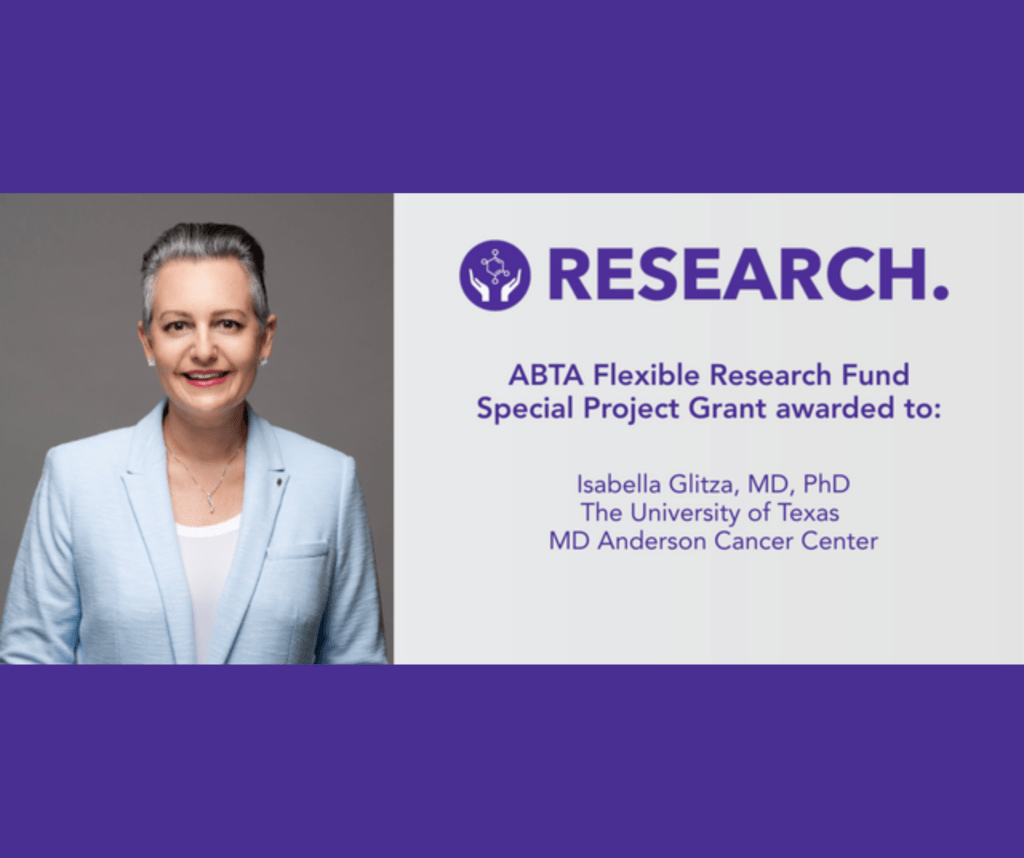
The ABTA is proud to announce the funding of a Special Project grant focused on treating and monitoring patients with leptomeningeal disease (LMD). Supported by the Flexible Research Fund, this project is run by Dr. Isabella Glitza, Professor and melanoma oncologist at the University of Texas MD Anderson Cancer Center and a leading expert on melanoma brain metastases and LMD. The project is co-led by Dr. Golnaz Morad, a cancer biologist and expert in microbiome research in brain tumors.
Metastatic melanoma is among the cancers most likely to metastasize to the central nervous system, including the cerebrospinal fluid (CSF) and the delicate membranes surrounding the brain, the leptomeninges. The ABTA Flexible Research Fund was established to address key gaps in brain tumor research funding. This newly funded project is focused on something that few researchers investigate, the patient microbiome (the community of tiny living microorganisms, like bacteria, that live in and on our bodies).
The team at MD Anderson has identified intriguing links between bacteria within the gut and mouth and the characteristics of brain metastases, suggesting that the microbiome may influence brain tumor behavior, and ultimately, patient response to immunotherapy-therapies, such as immune check point inhibitors, which help the immune system attack cancer cells.
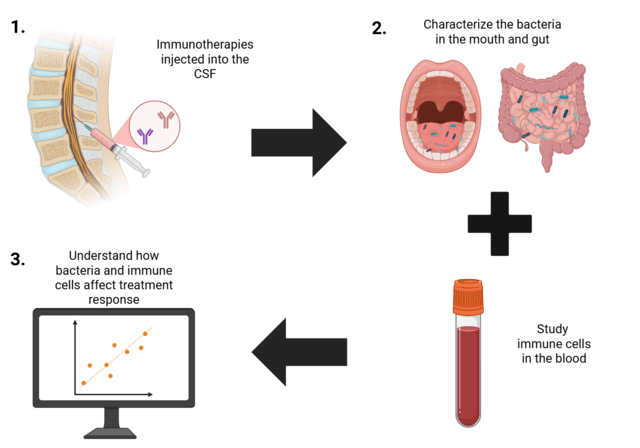
As part of an ongoing clinical study of patients receiving two immune checkpoint inhibitors administered not only by vein (standard type of administration) but directly into the CSF for the treatment of LMD, microbiome samples from these patients are being collected to understand if there is a similar relationship of the microbiome and cancer characteristics as seen in brain metastases.
This Special Project grant will enable Dr. Glitza’s team to more closely examine and characterize immune cells in the CSF and blood, as well as bacterial communities in the mouth and gut, to better understand how these factors interact and affect treatment response.
This research has the potential to help identify which patients are most likely to benefit from immune checkpoint inhibitors and to inform future strategies that improve outcomes for individuals living with leptomeningeal disease.
The ABTA is grateful for the generous gifts made by the 2025 Flexible Research Fund contributors, Team Schladt Foundation and a gift made in memory of Debbi Schaubman. To learn more about ABTA-funded research, click here.