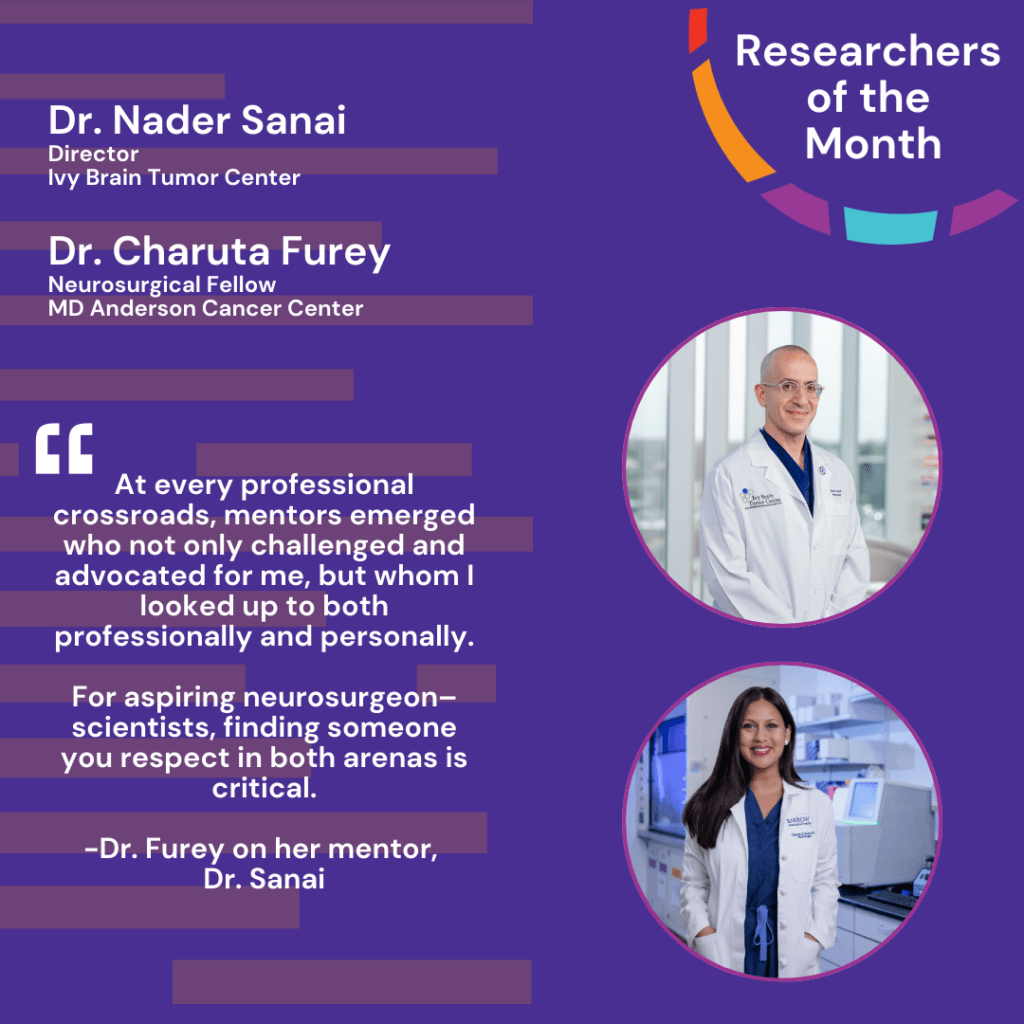
To celebrate mentor–mentee partnerships that help drive the neuro-oncology field forward, the ABTA is proud to feature Nader Sanai, MD, and Charuta Furey, MD, two neurosurgeons dedicated to improving care for patients with brain tumors. Their relationship shows how mentorship helps turn new ideas into real progress for patients. By learning from one another and working as a team, they are helping move brain tumor research forward in meaningful ways.
Dr. Furey is a neurosurgery fellow at MD Anderson and a former resident at the Ivy Brain Tumor Center, where she trained under Dr. Sanai. With support from the 2023 ABTA Basic Research Fellowship, she spent two years focused on research during her training—an experience she says was essential in shaping her work as a surgeon who brings science directly into patient care. Her research focuses on finding safer, easier ways to track how aggressive brain tumors change during treatment, without needing repeated surgeries to obtain tumor tissue.
Through this work, Dr. Furey helped develop a new approach that uses fluid around the brain, called cerebrospinal fluid (CSF), to study tumor changes over time. She helped develop a new way to track brain tumors over time by studying tiny pieces of tumor material collected from the CSF during early clinical trials, using advanced lab tools to better understand how tumors change during treatment. This approach can help doctors tell whether a treatment is working sooner—often before changes show up on scans—and can reveal when a tumor is starting to resist treatment. This information can help guide better treatment choices for patients, and her work has already helped support early studies and move a promising drug, niraparib, into a large international Phase 3 clinical trial called Gliofocus.
Dr. Sanai leads the Ivy Brain Tumor Center, which focuses on improving how new brain tumor drugs are tested and developed so effective treatments can reach patients faster, improving how new brain tumor drugs are tested. His team runs innovative clinical trials, called hybrid Phase 0 trials, that allow patients to try new treatments briefly before surgery, helping doctors learn quickly whether a drug reaches the tumor and works as intended. Dr. Furey’s work adds to this approach by making it possible to follow how a tumor changes over time, helping doctors see how it responds to new treatments and adjust care as needed.
Both Dr. Furey and Dr. Sanai have been personally affected by brain cancer in their families, a reality that deeply motivates their commitment to patient care and research. “When your family is touched by glioblastoma, you never forget. I view brain tumors in general, and glioblastoma in particular, as an adversary to defeat,” said Dr. Nader Sanai, whose efforts are “informed by the loss of my mother’s sister, as well as, more recently, my cousin.” Dr. Furey adds that “when brain cancer affects someone you love, it reframes the work in enduring ways,” underscoring the profound responsibility entrusted to neurosurgeons.
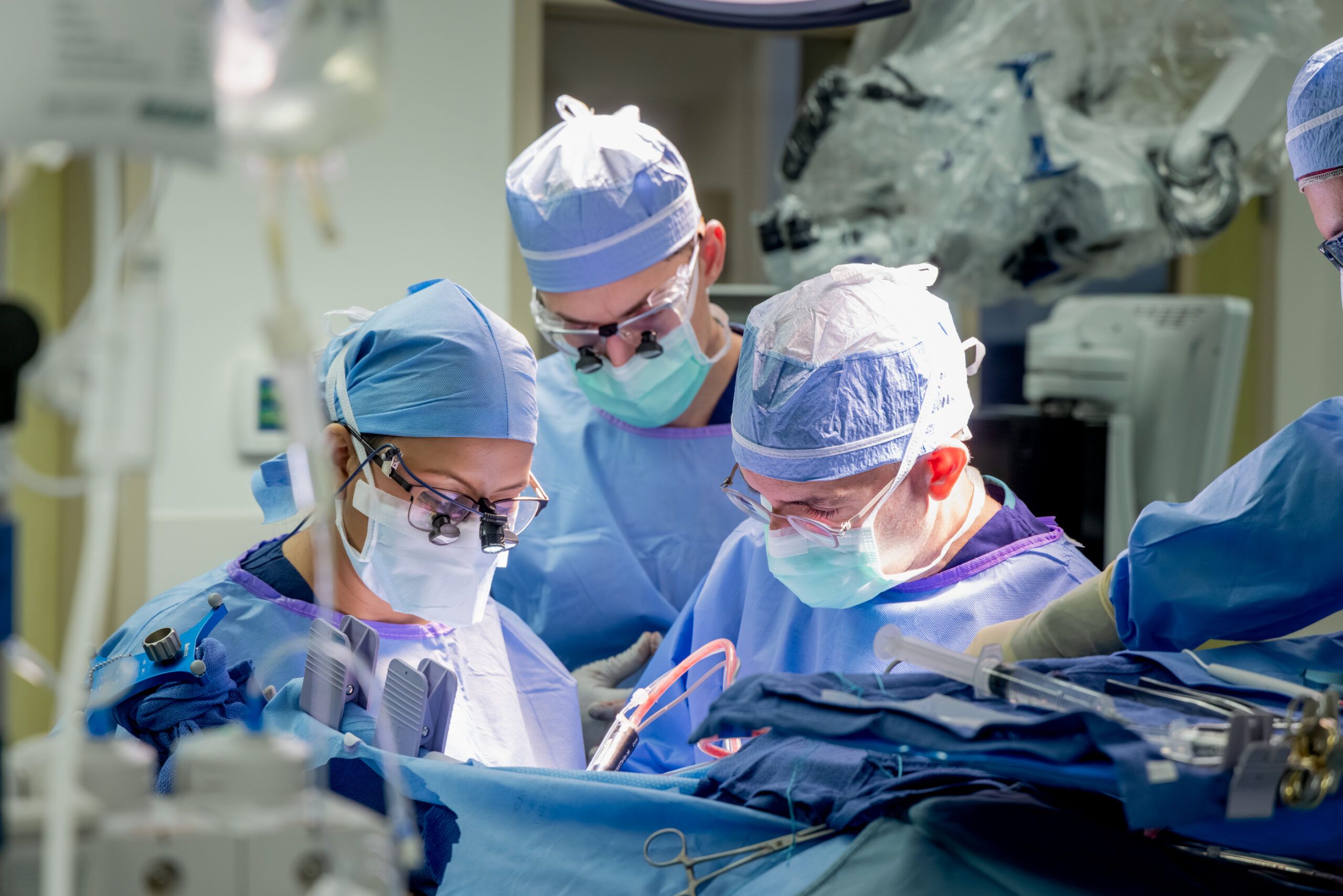
They also believe mentorship is essential in the field—helping young doctors grow, strengthening collaboration, and ensuring that promising research leads to better treatments. Dr. Furey states, “At every professional crossroads, mentors emerged who not only challenged and advocated for me, but whom I looked up to both professionally and personally.” She emphasizes that for aspiring neurosurgeon–scientists, finding someone you respect in both arenas is critical, and that Dr. Sanai demonstrated that surgical excellence and rigorous translational research are not opposing forces, but complementary responsibilities. Dr. Sanai advises, “Mentorship is about connection. Find someone whose life you want and learn how he/she got there. Trust has to be earned in both directions and, once that bond is established, you have an ally for life.”
Their story shows that mentorship is about more than building careers—it’s about working together with care and compassion toward a shared goal of bringing hope to patients and families facing brain tumors and turning scientific discoveries into better treatments.